
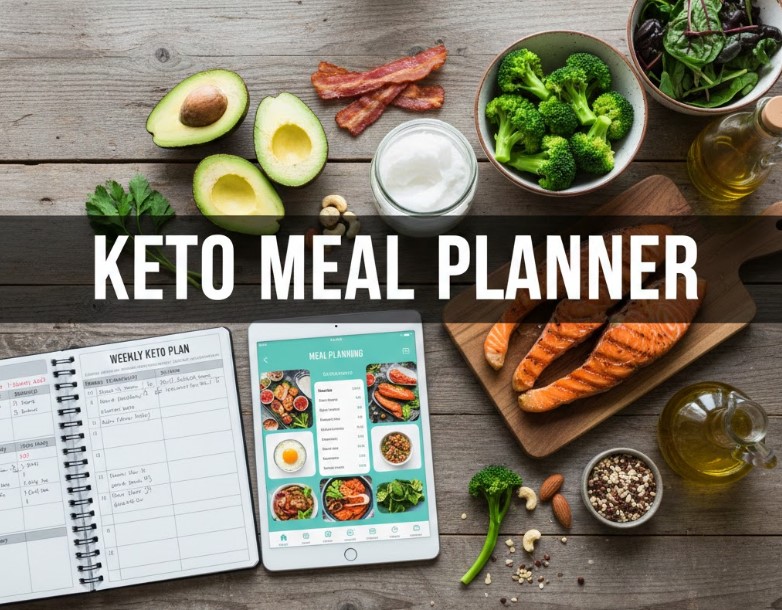
The Ultimate Keto Meal Planner is your secret weapon for success on the ketogenic diet. Embracing a ketogenic lifestyle, which focuses on high-fat, moderate-protein, and very low-carb intake, can be transformative, leading to increased energy, better mental clarity, and significant weight management.
However, staying consistent requires planning, and that’s where the Keto Meal Planner comes in. Without a clear strategy, navigating grocery stores, prepping meals, and sticking to the strict macro ratios can become overwhelming, often leading to frustration and falling off the wagon.
This comprehensive guide will walk you through the art and science of effective keto meal planning, ensuring your journey to ketosis is smooth, sustainable, and satisfying.
Why a Dedicated Keto Meal Planner is of High Importance
Adopting the ketogenic diet is a significant commitment to metabolic change. It requires shifting your body’s primary fuel source from glucose (carbohydrates) to ketones derived from fat.
This delicate biological process, known as ketosis, demands meticulous attention to diet, and this is precisely why a structured, dedicated Keto Meal Planner is not just helpful, but absolutely critical for long-term success.
The planner acts as the blueprint for maintaining the specific macronutrient ratios necessary to keep your body in that fat-burning state, preventing common pitfalls and optimizing results.
Guaranteed Macro Compliance is Achieved by a Keto Meal Planner
The single most crucial aspect of the ketogenic diet is adhering to the strict macronutrient ratios: typically 70-75% fat, 20-25% protein, and a mere 5-10% (under 20-50 grams) of net carbohydrates.
Even a slightly over-sized portion of an otherwise “healthy” food like a sweet potato, or an extra piece of fruit, can easily exceed the daily carbohydrate limit and halt ketosis.
Without a dedicated Keto Meal Planner, you are essentially guessing, making it incredibly easy to accidentally consume too many carbs, a phenomenon known as being “keto-casual” or “lazy keto.”
A planner forces you to pre-calculate, weigh, and log every ingredient, ensuring that every meal is perfectly balanced to keep your body in the desired fat-burning state. This removes the guesswork entirely and provides the necessary precision that this particular metabolic diet demands, protecting your investment of time and effort.
Elimination of Decision Fatigue and Impulse Eating
Daily food decisions are mentally taxing, and willpower is a finite resource. When you haven’t planned your meals, you face the daily dilemma of figuring out what low-carb, high-fat meal you can rapidly assemble, especially when you are hungry, tired, or pressed for time.
This “decision fatigue” is the number one cause of dietary failure. When faced with hunger and no easy keto option, the brain defaults to the quickest, most convenient food source, which is almost always a high-carb disaster like fast food, a baked good, or a packaged snack.
The Keto Meal Planner completely bypasses this psychological trap. By having a pre-determined, vetted, and logged meal ready to go, you eliminate the need for on-the-spot judgment. This preservation of mental energy allows you to focus on other goals, making the keto lifestyle feel sustainable rather than restrictive and stressful.
Significant Financial Savings and Reduction of Food Waste
Contrary to the misconception that specialized diets are always expensive, a dedicated Keto Meal Planner is a powerful tool for budget management. Planning allows you to construct your weekly grocery list based on exactly what you need, organized by store section.
This prevents impulse buying; those expensive, non-keto convenience foods that pad your grocery bill. Furthermore, by planning meals around similar ingredients, seasonal produce, and strategic bulk purchases of proteins (like a large roast that can be portioned for three different meals), you minimize food waste.
You buy only what you will use for the week, ensuring perishable items like specialty keto cheeses or fresh low-carb vegetables are consumed before they spoil.
This strategic approach turns your kitchen into an efficient food preparation lab, saving you money in the long run by replacing costly, unplanned meals out with affordable, home-cooked keto-compliant dishes.
Strategic Management of Electrolytes and Nutrients (Avoiding Keto Flu)
The transition into ketosis often triggers the infamous “keto flu,” a temporary collection of symptoms like headaches, fatigue, and brain fog, which are primarily caused by the rapid excretion of water and key electrolytes (sodium, potassium, and magnesium).
A well-designed Keto Meal Planner allows you to proactively manage and mitigate these symptoms. Instead of simply focusing on fat and carbs, the planner becomes a mechanism to ensure adequate intake of critical micronutrients.
You can intentionally schedule bone broth for sodium, avocado and spinach for potassium, and dark, leafy greens or specific supplements for magnesium.
This strategic nutrient planning turns the planner from a simple food log into a health management tool, making the induction phase of keto smoother, more comfortable, and significantly more likely to be completed successfully.
Maintaining Variety and Preventing Dietary Burnout
Many people who start keto without a plan fall into a rut, eating the same monotonous rotation of eggs and bacon or steak and broccoli. While compliant, this lack of variety quickly leads to dietary burnout and makes the lifestyle feel like a punishment rather than a sustainable way of eating.
A comprehensive Keto Meal Planner encourages and enforces culinary creativity. By setting aside time for planning, you are prompted to seek out new, exciting keto-friendly recipes, incorporate different types of fats and low-carb vegetables, and experiment with spices and flavor profiles.
You can strategically plan themed days (e.g., “Mexican Keto Bowl Monday” or “Italian Zucchini Noodle Thursday”) to ensure your meals are delicious and satisfying.
This scheduled variety keeps the diet fresh, keeps your palate engaged, and is essential for adhering to the keto lifestyle indefinitely.
Facilitating Tracking, Review, and Future Adjustments
The Keto Meal Planner serves as essential documentation for your dietary experiment. If your weight loss plateaus, or if you feel consistently low on energy, reviewing a previous week’s planner provides immediate, actionable data.
You can pinpoint exactly where you might have stalled—perhaps unintentionally consuming too much protein or needing more healthy fats to feel satiated. This historical record is invaluable for making informed, scientific adjustments.
Instead of vaguely wondering what went wrong, you have a precise, week-by-week log that allows you to confidently tweak your macro ratios, portion sizes, or ingredient choices for the next planning cycle.
This feedback loop is the difference between blindly dieting and strategically optimizing your personal metabolic health journey.
The Science of the Keto Plate: Understanding Your Macros
The success of the ketogenic diet hinges entirely on a precise understanding and application of macronutrient ratios, or “macros.”
These macros, fat, protein, and carbohydrates, are not merely food groups; they are the hormonal and metabolic signals that dictate whether your body remains in the highly desirable fat-burning state of ketosis.
A deep understanding of the science of the Keto Meal Planner reveals why the specific ratios are essential and how each macronutrient contributes to the overall goal of becoming a fat-adapted machine.
Mastering these ratios is the key to unlocking the full therapeutic and weight-management potential of this low-carb, high-fat lifestyle.
The Dominance of Fat: Fueling Ketosis (70-75% of Calories)
In the ketogenic diet, fat is deliberately elevated to become the dominant source of energy, typically accounting for three-quarters of your total daily caloric intake. This high-fat mandate is a direct metabolic signal to the body.
When carbohydrate stores are depleted, and an abundant supply of dietary fat is available, the liver begins breaking down fatty acids into molecules called ketone bodies (beta-hydroxybutyrate, acetoacetate, and acetone).
These ketones then circulate in the bloodstream and are used as a superior, clean-burning fuel source by the brain and muscles, replacing glucose.
A dedicated Keto Meal Planner must prioritize high-quality, diverse fats, to ensure the sustained production of ketones.
Insufficient fat intake, even if carbs are low, can lead to lethargy and hunger, as the body struggles to generate enough fuel to maintain energy balance. Fat is the lever that sustains the metabolic shift from glycolysis to ketogenesis.
The Crucial Moderation of Protein: Avoiding Gluconeogenesis (20-25% of Calories)
While protein is essential for maintaining muscle mass, supporting hormonal balance, and providing structural material for the body, it is a macronutrient that must be consumed in careful moderation on the ketogenic diet. The ideal protein range is typically set at 0.8 to 1.2 grams per kilogram of lean body mass.
The scientific rationale for this limitation lies in a metabolic pathway called gluconeogenesis (GNG). If the body detects an excessive amount of amino acids (the building blocks of protein) in the absence of glucose, the liver has the ability to convert those excess amino acids into glucose.
This production of new sugar can elevate blood glucose levels and, crucially, lead to an insulin response, which acts as a powerful inhibitor of ketosis.
Therefore, a successful Keto Meal Planner focuses on adequate, not excessive, protein intake, prioritizing nutrient-dense sources like eggs, fatty cuts of meat, and fish to meet daily requirements without risking the disruption of ketone production. Protein serves a structural and satiety role, but must not overshadow the caloric importance of fat.
The Strict Limitation of Carbohydrates: The Metabolic Switch (5-10% of Calories)
The most defining characteristic of the keto diet is the severe restriction of carbohydrates, typically aiming for 20 to 50 grams of net carbs per day.
This is the ultimate metabolic switch. Carbohydrates, once digested, are converted into glucose, which is the body’s preferred and easiest energy source.
Glucose triggers the release of insulin, a storage hormone that tells the body to burn the incoming sugar first and also signals to fat cells to lock down their stored energy. By dramatically cutting off this glucose supply, the Keto Meal Planner forces the body to deplete its glycogen reserves (stored glucose in the liver and muscles).
Once these reserves are empty, the body receives the clear signal that it must find an alternative fuel source, thus initiating ketogenesis.
This strict carb limitation is the necessary trigger that shifts the body into a state of nutritional ketosis, making the distinction between net carbs (total carbs minus fiber and specific sugar alcohols) a critical calculation for every single meal planned.
The Importance of Net Carbs and Fiber for Digestive Health
Within the carbohydrate limit, the concept of net carbs is scientifically vital for a functioning Keto Meal Planner. Net carbs are the carbohydrates that are actually digested and absorbed by the body to be used as energy or stored.
The formula is: Total Carbohydrates, Sugar Alcohols (or a portion of them). Fiber, being indigestible, is not converted to glucose and therefore does not impact blood sugar or disrupt ketosis.
Moreover, fiber from low-carb vegetables like spinach, broccoli, and cauliflower is essential for maintaining digestive health, which can sometimes be challenged by the shift to a high-fat diet.
A successful planner strategically uses the small carb allowance almost exclusively on nutrient-dense, high-fiber vegetables, ensuring the body gets necessary vitamins, minerals, and roughage, rather than “empty” carbs from processed keto snacks that offer little nutritional value.
This careful allocation maximizes satiety and supports gut regularity while still guaranteeing metabolic compliance.
Building Your Weekly Keto Meal Planner: A Step-by-Step Guide
The transition to a ketogenic lifestyle moves from theory to tangible practice through the creation of a structured, weekly Keto Meal Planner.
This systematic approach transforms the complex metabolic requirements of the diet into an actionable roadmap, ensuring you stay in ketosis while enjoying satisfying and diverse meals.
By breaking the planning process down into manageable steps, you can eliminate the anxiety of dietary compliance and establish a sustainable routine for long-term health and weight management.
Step 1: Calculate Your Individual Macro and Calorie Needs
The foundational step for building any effective Keto Meal Planner is precision. You must begin by accurately calculating your personalized caloric intake and the grams required for each macronutrient; fat, protein, and net carbs.
Use an online ketogenic calculator to determine your Basal Metabolic Rate (BMR) and your Total Daily Energy Expenditure (TDEE), factoring in your age, height, weight, gender, and activity level.
Then, apply the standard keto percentages (typically 70-75% fat, 20-25% protein, 5-10% net carbs) to those TDEE calories to find your targets in grams.
This step ensures your planner is tailored to your body’s unique needs, preventing undereating (which stalls metabolism) or overeating (which prevents weight loss). This calculated target, becomes the non-negotiable quantitative framework for every meal you plan.
Step 2: Establish a Consistent Meal Structure and Intermittent Fasting Schedule
Once your macro targets are set, the next critical step is to define the temporal structure of your eating. Decide how many meals you will consume each day and if you will incorporate Intermittent Fasting (IF), which is highly complementary to the keto diet.
Many keto dieters find success with a two-meal structure (e.g., brunch and dinner) within an 8-hour eating window (like 12 PM to 8 PM, known as 16/8 IF), or even one meal a day (OMAD). Your Keto Meal Planner should block out these times clearly.
A consistent structure reduces the likelihood of impulsive snacking outside of planned meals, which often leads to hidden carbohydrate consumption. By defining the when you eat, you create a rigid schedule that helps regulate hunger hormones and reinforces the fat-adapted state.
Step 3: Select and Incorporate Keto-Friendly Recipes and Themes
To ensure compliance without boredom, you need a diverse library of compliant recipes. For your weekly Keto Meal Planner, select four to five main dinner recipes and two or three breakfast/lunch ideas that align with your calculated macros.
Introduce weekly themes, such as “Sheet Pan Sunday” or “Seafood Friday,” to simplify decision-making and grocery shopping.
Prioritize recipes that lend themselves well to batch cooking, preparing large quantities of a protein (like a roasted chicken or slow-cooked pork shoulder) that can be easily repurposed across several days and meals.
This not only saves immense time during the busy week but also locks in your macronutrient count for those core components, making the daily tracking much simpler and preventing the dreaded “keto rut” of eating the same bland meals.
Step 4: Plug Meals and Calculate Macros into Your Planning Tool
With your recipes chosen, it’s time to populate the grid of your Keto Meal Planner. Use a dedicated app, a detailed spreadsheet, or a simple notebook to map out every food item for breakfast, lunch, and dinner, day by day.
More importantly, you must now look up the nutritional data for the specific ingredients and portions of your planned meals. For example, logging a “Chicken Thigh with Asparagus” is not enough; you must log “4oz Chicken Thigh with Skin,” “1 Tbsp Olive Oil,” and “1 cup Steamed Asparagus.”
As you log these ingredients, continuously tally the calories and grams of net carbs, fat, and protein. This immediate calculation confirms that the planned meal fits perfectly within the macro targets you established in Step 1, ensuring the week ahead is 100% compliant and geared towards your specific goals.
Step 5: Generate an Organized and Actionable Shopping List
The Keto Meal Planner is useless if you don’t have the ingredients. The next step is to translate the contents of your weekly plan into a consolidated, organized shopping list.
List only the items you need and organize them by the layout of your grocery store (e.g., Produce, Dairy, Meat/Deli, Pantry/Oils). This practice is a powerful guardrail against “cheat food” purchases. If an item is not on the list, you do not buy it.
Furthermore, the act of generating the list allows you to double-check for any missing ingredients and consolidate items.
For instance, if four recipes call for heavy cream, you list the total required quantity once, streamlining your purchase and confirming your kitchen is stocked only with items that support your keto goals.
Step 6: Dedicate Time for Preparation and Review
The final, often overlooked, step is scheduling time for a Sunday (or preferred day) preparation session.
This is the action phase of your Keto Meal Planner. Dedicate an hour or two to wash and chop vegetables, cook the large batch protein, portion out grab-and-go snacks (like cheese and nut packs), and assemble lunch containers.
This pre-prepping ensures that when hunger strikes on a Tuesday evening, the compliant meal is ready in minutes, eliminating the inertia that leads to ordering takeout.
Furthermore, make it a habit to review the current week’s plan every day, noting what worked well, what was too much effort, and what kept you satiated. This daily check-in and weekly refinement process allows you to continuously adapt your planner, making it more efficient and personalized over time.
Troubleshooting and Maximizing Your Keto Meal Planner
Even the best-laid plans encounter challenges. Here are tips for long-term success with your Keto Meal Planner.
Addressing the “Keto Flu”
When starting out, your body is transitioning from sugar to fat burning, which can cause temporary fatigue, headaches, and brain fog, known as the “keto flu.”
Your Keto Meal Planner must include electrolytes. Ensure you are consuming enough salt (sodium), potassium (from avocado and spinach), and magnesium (from nuts and seeds). Adding bone broth to your plan is a simple, effective solution.
Staying Consistent While Dining Out
Eating away from home doesn’t have to derail your plan. Always look for:
- Meat/Fish + Low-Carb Veggies: Order steak, chicken, or fish and ask for a side salad or steamed vegetables instead of potatoes, rice, or bread.
- Ask for Substitutions: Request that dishes be cooked in butter or olive oil, not vegetable oil. Ask for sauces on the side, or opt for simple, clean sauces like garlic butter.
- Salad is Your Friend: Order a large chef or Cobb salad, but be vigilant about the dressing. Ask for oil and vinegar, or a creamy dressing on the side to control the portion.
Tracking and Adapting
Your Keto Meal Planner is a living document. Check in with yourself weekly:
- Are you feeling energetic?
- Are your clothes fitting better?
- Are you hitting your macro goals consistently?
- Are you happy with the food?
If something isn’t working, if you’re hungry, or if your weight loss has stalled, adjust your portions and macros in the planner for the following week. You may need to slightly increase your fat intake for satiety or adjust your protein if you are highly active.
Conclusion
Adopting a ketogenic lifestyle is a commitment, but with a powerful and customized Keto Meal Planner, it becomes a simple, enjoyable routine rather than a constant battle of willpower. Start small, batch prep a few meals, and remember that consistency, not perfection, is the key to achieving your long-term health and wellness goals. Your journey to optimal health begins now, one perfectly planned meal at a time.